Ohms, Amps and Blown Speakers: A Plain-English Guide to Impedance and Amplifier Matching
A bridged amplifier driven into a load it was never rated for, a compression driver cooked by a clipping amp, gear bought on a wattage figure the mains couldn't deliver. Almost all of it comes down to impedance — here's the guide we wish every customer had read first.
At NXT Level Tech in Blackheath, Cape Town, we see the same handful of failures come across the counter month after month: a bridged amplifier driven into a load it was never rated for, a compression driver cooked by a clipping amp that was too small for the job, and gear bought on a wattage figure that the mains supply couldn't physically deliver.
Almost all of it comes down to one thing — impedance, and how it's understood. So we've put together the guide we wish every customer had read first. It's written for DJs, venue owners, installers and hire companies working with passive PA systems, and it assumes no electrical background. If you take nothing else from it, the summary below will save you money.
The short version — read this if you read nothing else
- Impedance (Ω) is how hard your speakers make your amplifier work. Lower ohms = more current = more power = more heat.
- Never present a lower impedance than your amp's minimum rating. That number is on the back panel or in the manual. It is not a suggestion.
- Bridging halves the safe minimum load. An amp that is 2Ω stable per channel is only 4Ω stable when bridged. This is the single most common way hire gear gets destroyed.
- Aim for an amplifier rated 1.5 to 2 times your speaker's continuous (AES/RMS) power. The old "20% headroom" rule you'll see on forums is far too little.
- Underpowering kills more speakers than overpowering. A clipping amp is what burns voice coils.
- Doubling your power only gets you 3 dB. It is a noticeable step, not a dramatic one. You need ten times the power to sound "twice as loud."
What impedance actually is
Impedance is a speaker's opposition to the alternating current your amplifier pushes into it, measured in ohms (Ω). It's the number that decides how much current the speaker draws, how much power the amp delivers, and whether the amp survives the night.
The critical thing most spec sheets don't spell out: the impedance printed on the box is nominal. It's a headline average. A speaker sold as 8Ω doesn't sit at 8Ω — its real impedance swings continuously with frequency, dipping below the rated figure at some points and climbing to several times it at the driver's resonance.
This matters practically. It's why an amp that seems comfortable on paper can still hit protect mode on a heavy bass track, and why "close enough" impedance maths is a bad habit.
The plumbing analogy
To explain this to a client without an engineering lecture, picture a water system.
The amplifier is the pump. It creates the pressure (voltage) that pushes current through the circuit. Impedance is the valve — it sets how easily current flows. An 8Ω load is a narrow opening: less current flows, the pump runs cool and relaxed, but total output is capped. A 4Ω load is a wide opening: roughly double the current floods through, so you get more power out — but the pump is working twice as hard and running hotter.
Where the analogy breaks down: doubling the water does not double the loudness. More on that shortly.
Series vs parallel: how wiring changes the load
When you connect more than one speaker to a single amplifier channel, how you wire them determines what the amp actually sees.
Parallel wiring — the power multiplier
All positives joined together, all negatives joined together. Each speaker gets the full voltage from the amp.
Total impedance = impedance of one speaker ÷ number of speakers
Two 8Ω cabinets in parallel = 8 ÷ 2 = 4Ω. Four 8Ω cabinets in parallel = 2Ω. Two 4Ω cabinets in parallel = 2Ω.
If the speakers are not identical, that shortcut doesn't work. Use the reciprocal formula:
1 ÷ Total = (1 ÷ Z₁) + (1 ÷ Z₂) + (1 ÷ Z₃) …
An 8Ω and a 4Ω in parallel gives 2.67Ω, not 6Ω. Mixing impedances in parallel also means the lower-impedance cabinet hogs more of the power — a common cause of one speaker cooking while its partner sounds fine.
When to use it: almost always. Parallel is the standard way to run multiple passive cabinets from one channel, provided the total stays at or above the amp's minimum rating.
Series wiring — the safety brake
Speakers chained end to end. The same current flows through every speaker in the chain.
Total impedance = Z₁ + Z₂ + Z₃ …
Two 8Ω cabinets in series = 16Ω.
The honest assessment: series wiring is genuinely rare in live sound, and not just because it's quieter. Three real problems:
- You lose power. Doubling impedance roughly halves the amp's output — about 3 dB down. Noticeable, but not catastrophic on its own.
- You lose damping factor. Each speaker's own impedance now sits between the amplifier and its neighbour. Bass control gets softer and less defined.
- The speakers interact. Because they share a current path, each cabinet's impedance swings affect what the other one receives. With non-identical cabinets, this gets messy fast.
When to use it: raising the load to protect an amp that can't handle a parallel bank, or as part of a series-parallel array (e.g. four 8Ω cabinets as two series pairs in parallel = 8Ω total). It's a tool, not a default.
Reality check: what more power actually buys you
This is where a lot of budget gets wasted, so it's worth being blunt with clients.
The relationship between power and perceived volume is logarithmic, not linear:
| Power change | SPL change | What people actually perceive |
|---|---|---|
| ×2 (double) | +3 dB | A small but clearly audible step |
| ×4 | +6 dB | Meaningfully louder |
| ×10 | +10 dB | Roughly "twice as loud" |
So going from an 8Ω to a 4Ω load — doubling your power — gains you about 3 dB. Real, useful, and worth having. But it is not the night-and-day difference the marketing implies.
If a client wants a genuinely dramatic increase in level, more efficient speakers or more speakers beat more watts every time. Adding 3 dB of driver sensitivity is free power. Chasing 10 dB with wattage alone means a tenfold increase in amplifier.
Amplifier stability: the number that actually matters
Every amplifier has a minimum load impedance in its specifications — typically 4Ω, 2Ω, or occasionally lower. Presenting a load below that figure forces the amp to supply current its power supply and output devices weren't designed for. The results, in order of increasing expense: protect mode, thermal shutdown, distortion, failed output stage.
2Ω operation
Running at 2Ω extracts maximum current from an amplifier, and it's only safe when the manufacturer explicitly publishes a 2Ω rating. Plenty of good amps don't — the Celto Core and Performance ranges stop at 4Ω per channel, and that's a design decision, not a shortcoming.
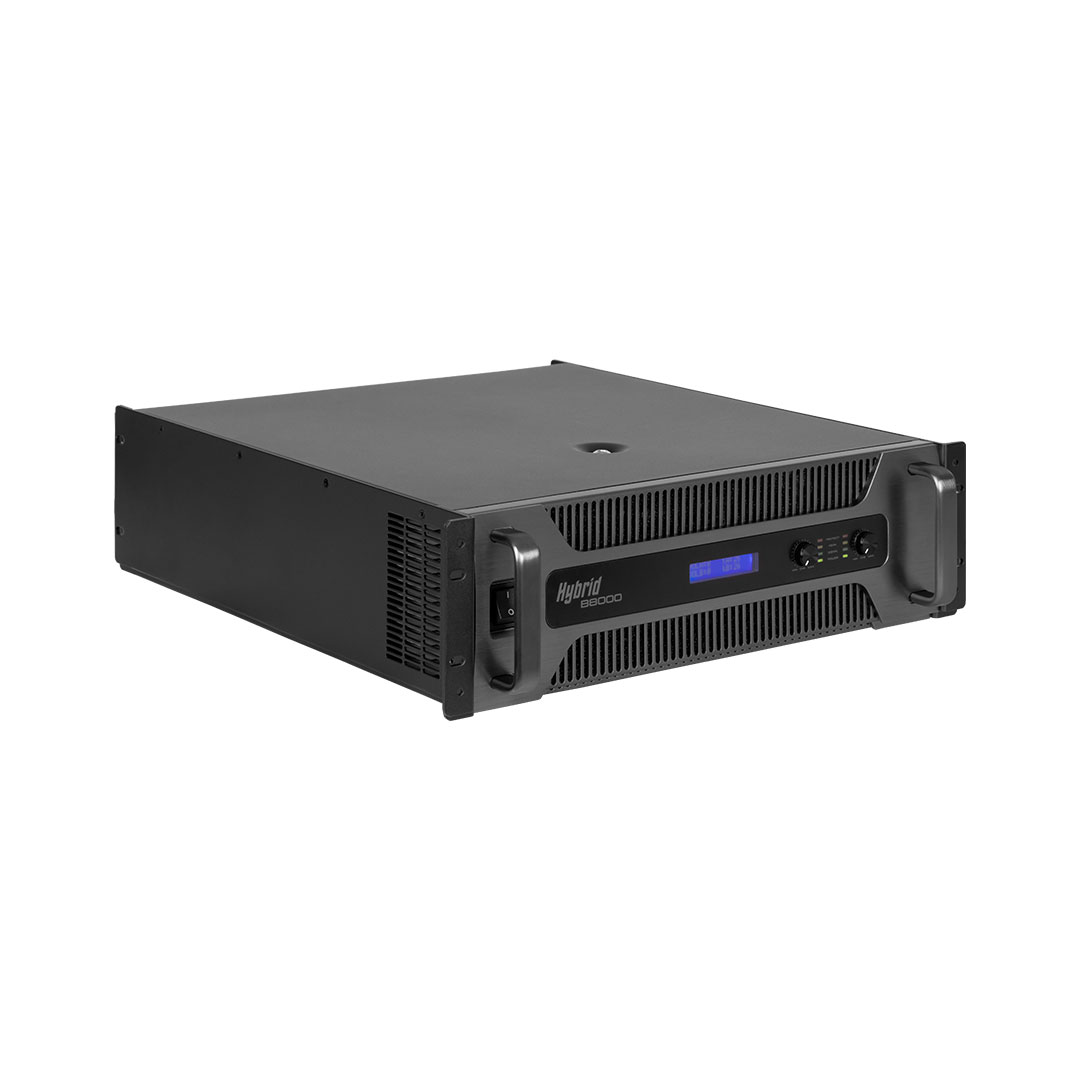
Where a 2Ω rating does exist, as on the Hybrid B8000 MK6 and Celto SQ8800, the amp is built for it: current limiting, impedance sensing and thermal protection are all part of the design. But it still demands real ventilation — proper rack spacing, unobstructed fan intakes, and an eye on ambient temperature. A 2Ω-stable amp buried in a sealed flightcase in a Cape Town summer is still going to shut down.
And as the comparison further down shows, a 2Ω rating doesn't automatically mean more power at 2Ω. Read the actual figure before you design around it.
Bridging: the trap that catches everyone
Bridging combines two channels into one higher-power mono output. It's useful for driving a single sub. It's also the fastest way to destroy an amplifier, because:
Bridging halves the minimum impedance the amp can safely drive.
Each channel effectively sees half the connected load. So:
- Amp is 2Ω stable per channel → minimum bridged load is 4Ω
- Amp is 4Ω stable per channel → minimum bridged load is 8Ω
If the manufacturer doesn't publish a bridged power rating, assume the amp isn't bridgeable and don't improvise it. And when in doubt, treat 8Ω as your bridged floor.
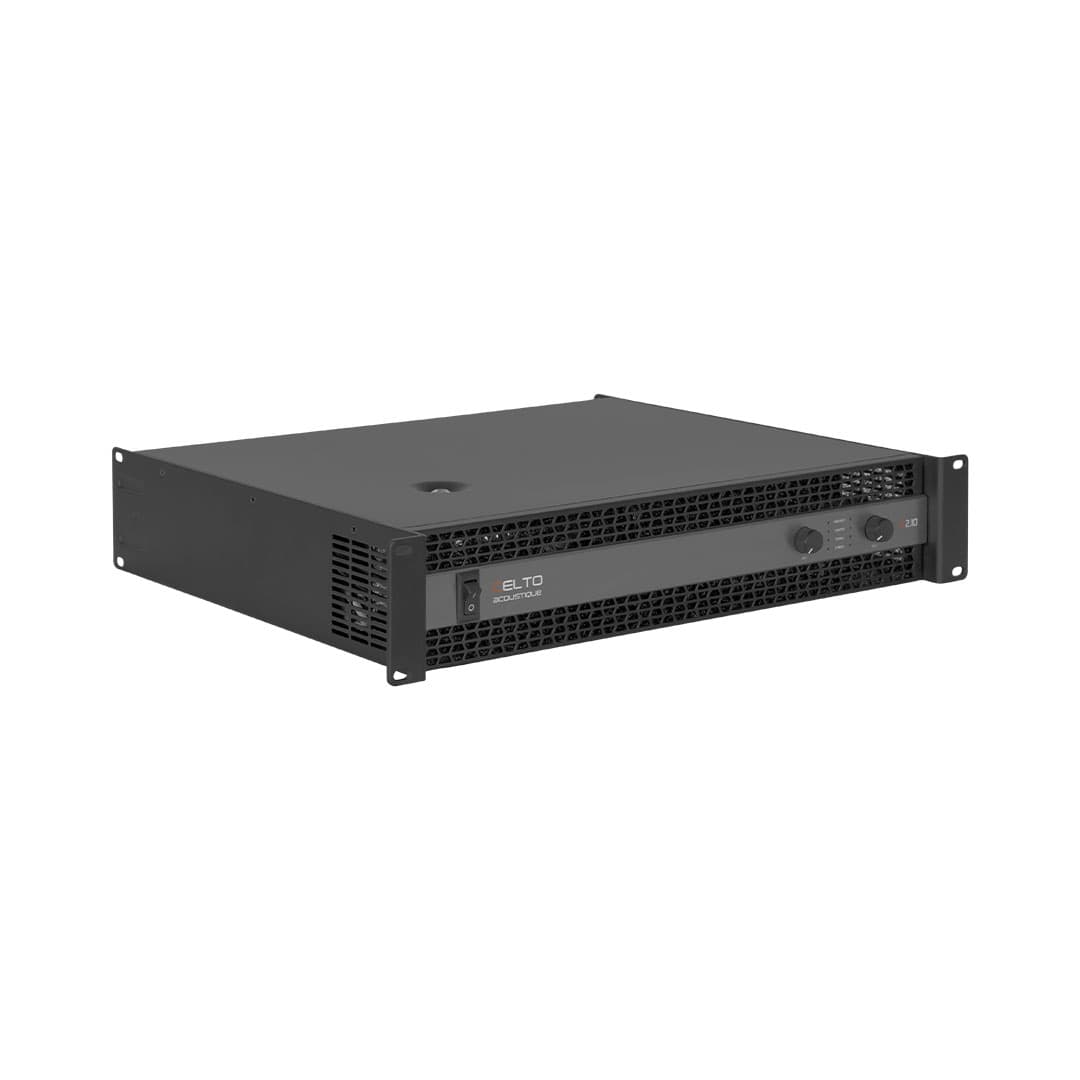
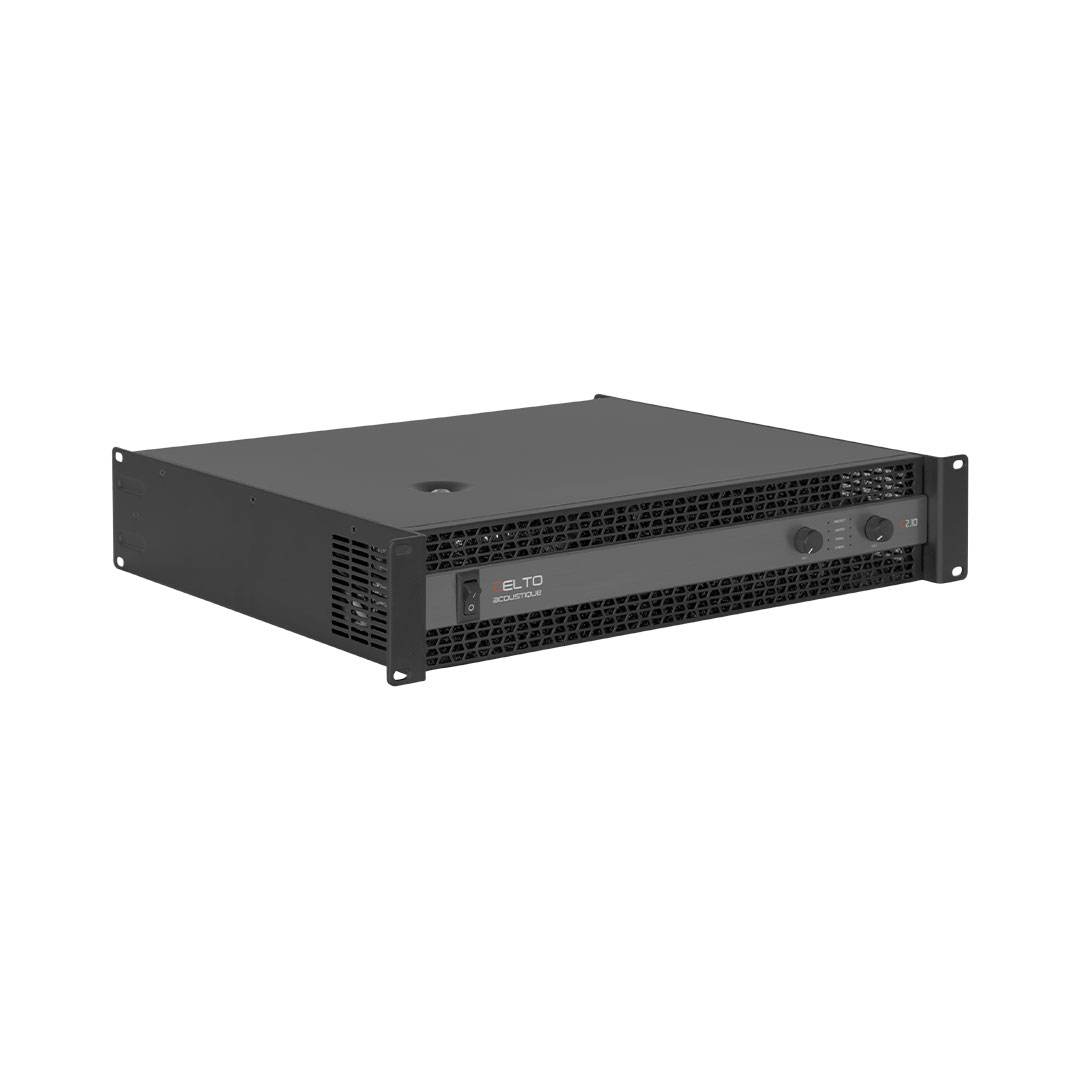
A worked example from our own shelves. The Celto Acoustique C2.10 is rated 2× 750W at 8Ω, 2× 1100W at 4Ω, and 1× 2200W at 8Ω bridged.
Read that last figure carefully. The bridged rating is quoted at 8Ω, not 4Ω — because each channel is rated down to 4Ω, and bridging means each side sees half the connected load. Hang a 4Ω load off that bridged output and each channel is working into 2Ω, which is outside what the amplifier was built for.
This is the pattern across the Celto Core series, and it's typical of well-specified amplifiers generally. When a manufacturer publishes 8Ω, 4Ω and bridged-8Ω figures and stops there, that's not an oversight — it's telling you where the floor is. Always confirm against the manual for your specific unit before committing a design.
 Celto Acoustique
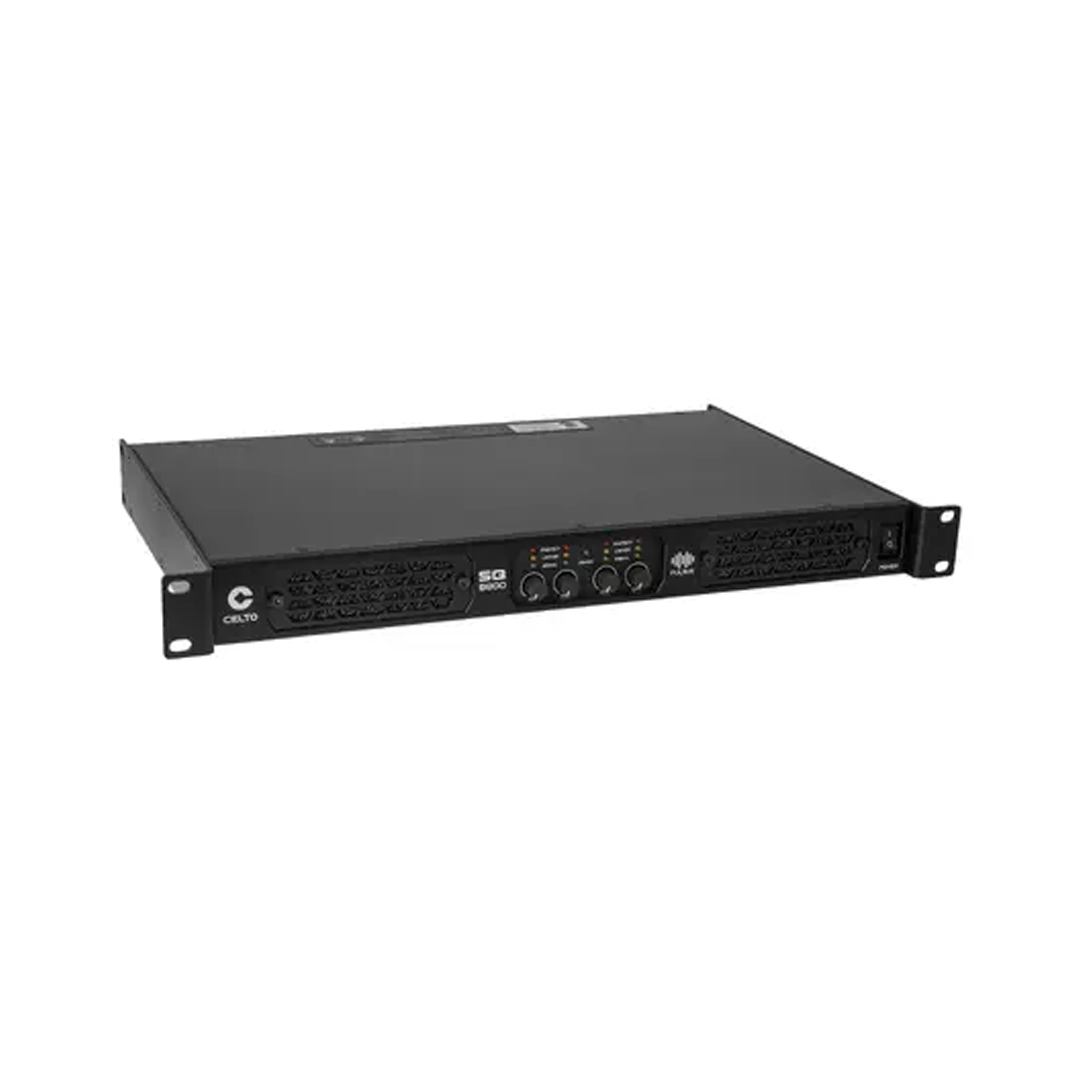
SQ8800 Power Amplifier (2Ω-stable, current-limited)
R 21 375 incl. VAT
View product
Celto Acoustique
SQ8800 Power Amplifier (2Ω-stable, current-limited)
R 21 375 incl. VAT
View product
Spotting inflated power ratings
Unbranded and grey-import amplifiers routinely print numbers that physics doesn't support. Three checks that cost you nothing:
1. The mains supply test
An amplifier cannot deliver more sustained power than it can draw from the wall, minus its losses.
Maximum sustained output ≈ (Voltage × Fuse or inlet rating) × efficiency
South Africa runs on 230V at 50Hz, and most amps arrive on a standard IEC C13 "kettle" lead rated 10A.
Worked example. An amp claims 2 × 1,500W RMS (3,000W total). It has a 10A mains fuse and a standard IEC lead.
- Maximum draw: 230V × 10A = 2,300VA
- Class D efficiency, realistically 85%: 2,300 × 0.85 ≈ 1,955W
The 3,000W continuous claim is impossible. The amp is drawing less from the wall than it claims to produce.
One honest caveat: amplifiers store energy in their power supply capacitors and can exceed mains-limited output on short musical peaks. Music is dynamic, so this isn't cheating. But it only applies to bursts. Any continuous or RMS rating above what the supply can feed is a fiction.
| Amplifier class | Realistic efficiency |
|---|---|
| Class D / Class TD | 85–92% |
| Class H | ~70% |
| Class AB | 50–65% |
| Class A | 20–30% |
Class H and Class TD sit in the middle by design — a linear output stage fed by a rail supply that steps voltage up only when the signal demands it. You'll find both in well-built stage amplifiers, including models across the Celto Core range (which pair a linear toroidal supply with Class H or Class TD output stages depending on the model). The trade-off is more weight and heat in exchange for a robust, serviceable design.
2. The ohm-scaling test
Halving the impedance should roughly double the power. Perfect doubling is theoretical — real power supplies sag — but a well-built amp gets close.
- Credible: 300W at 4Ω → 500–600W at 2Ω. The supply has current in reserve.
- Honest but limited: 300W at 4Ω → 300W or slightly less at 2Ω. This is a manufacturer telling you the amp is safe at 2Ω but power-limited there. It's a legitimate rating, not a lie — see the worked comparison below.
- Fiction: an amp with no 2Ω rating at all, sold on the basis that it'll "handle" 2Ω anyway. Or a claimed jump so large the mains supply couldn't feed it.
The distinction matters, and a lot of online advice gets it wrong. A flat or slightly reduced 2Ω figure isn't a red flag — it's current limiting working as designed, and it tells you exactly what you'll get. What should worry you is a 2Ω figure that's missing entirely, or one that implies power the amplifier has no way to produce.
The same test works upward: an amp claiming identical wattage at 8Ω and 4Ω is either heavily current-limited or the numbers are invented.
What honest scaling looks like in practice. Here's the test applied to amplifiers we stock, using the manufacturer's own published figures:
| Amplifier | 8Ω | 4Ω | Scaling |
|---|---|---|---|
| Celto C2.6 | 2× 400W | 2× 600W | 1.50× |
| Celto C2.10 | 2× 750W | 2× 1100W | 1.47× |
| Celto C2.20 | 2× 1200W | 2× 2000W | 1.67× |
| Celto P2.14 | 2× 800W | 2× 1400W | 1.75× |
| Celto P2.25 | 2× 1300W | 2× 2500W | 1.92× |
Note that none of these claim a perfect 2× doubling. Real power supplies sag under load, and honest manufacturers publish what the amplifier actually delivers. Ratings between roughly 1.5× and 1.9× are exactly what you should expect to see.
There's a second thing worth noticing. The Performance models (P2.14, P2.25) scale harder than the smaller Core models — the P2.25 is close to a true doubling. Broadly, the stiffer the power supply, the better an amplifier holds up as impedance falls, and that's a real reason to spend more when your system is going to sit at 4Ω all night.
If you're comparing something against these numbers and it claims a 2.5× or 3× jump between 8Ω and 4Ω, the specification is fiction.
Two 2Ω-capable amplifiers, and why they behave differently
The Core and Performance amps above stop at 4Ω. Two units we stock go lower, and comparing them side by side teaches the whole lesson better than any rule of thumb.
| Celto SQ8800 | Hybrid B8000 MK6 | |
|---|---|---|
| 8Ω | 4× 1300W | 2× 1800W |
| 4Ω | 4× 2200W | 2× 2800W |
| 2Ω | 4× 2000W | 2× 4000W |
| 8Ω → 4Ω | 1.69× | 1.56× |
| 4Ω → 2Ω | 0.91× | 1.43× |
Look at that bottom row.
The Hybrid B8000 keeps climbing. It gains 43% more power going from 4Ω to 2Ω. The supply has genuine current headroom, and 2Ω operation buys you real output.
The Celto SQ8800 goes down. At 2Ω it delivers 2000W per channel — 200W less than it makes at 4Ω. That is not a misprint and it is not a defect. It's current limiting, published honestly.
So what does the SQ8800's 2Ω rating actually mean? It means the amplifier is engineered to survive a 2Ω load safely — the protection and current limiting will hold — but you shouldn't drop to 2Ω expecting more power, because you'll get slightly less. The reason to run it at 2Ω is to hang more cabinets per channel, not to make them louder.
That's a genuinely useful thing to know before you design a rig around it. A manufacturer that publishes a number lower than the one above it is being straight with you. Be far more suspicious of the amp that simply doesn't mention 2Ω and leaves you to find out.
The bridging figures should reconcile
The B8000 also demonstrates what an internally consistent spec sheet looks like. It's rated 1× 5600W bridged at 8Ω and 1× 7800W bridged at 4Ω. Check those against the per-channel numbers:
- Bridged into 8Ω → each channel sees 4Ω → 2× 2800W = 5600W. Exact match.
- Bridged into 4Ω → each channel sees 2Ω → 2× 4000W = 8000W. Published as 7800W — slightly conservative, which is what you want to see.
The bridged floor is 4Ω, and that follows directly from the amp being 2Ω stable per channel. The maths reconciles in every direction. When a spec sheet holds together like that, the numbers were measured. When bridged figures don't reconcile with per-channel figures, someone was writing marketing copy.
3. RMS vs peak
- RMS / continuous power is the real-world figure. This is the only number to use for system matching. (Pedant's note: "RMS power" is technically a misnomer — it's average power calculated from RMS voltage and current — but the term is universal, so we all use it.)
- Peak / PMPO / max power is a marketing number describing what the amp can survive for a fraction of a second. PMPO figures in particular are essentially meaningless and should be ignored entirely.
If a product page leads with peak power and buries or omits RMS, that tells you what you need to know.
Headroom: the rule most people get wrong
Here's the correction that matters most, because the widely repeated "add 20% and you're fine" advice is badly wrong.
Twenty percent more power is about 0.8 dB of headroom. Music peaks routinely sit 12 to 20 dB above the average level. That margin doesn't come close.
The consensus across Crown, JBL, and every major pro-audio manufacturer:
Choose an amplifier rated 1.5 to 2 times your speaker's continuous (AES) power rating.
This gives roughly 3 to 6 dB of headroom for transients. Crown's own guidance goes further: with a limiter in the chain, use 2 to 4 times the continuous rating. For light dance music and speech, 1.6× is adequate. For heavy, dynamic material, closer to 2.5×.
Worked example. A cabinet rated 500W AES at 8Ω:
| Application | Target amp power (8Ω) |
|---|---|
| Speech, background music | ~800W |
| General live / DJ use | 750W – 1,000W |
| Heavy dynamic material, limiter fitted | 1,000W – 1,500W |
The one exception: if you have no limiter and the system will definitely be overdriven — an unsupervised hire situation, a venue where the amp rack is accessible — then matching amp power to the speaker's continuous rating is the safer call. That way the amp runs out of steam before the speaker does.
Why underpowering is the real killer
This is counterintuitive and worth explaining to clients directly.
When an amplifier runs out of voltage, it can't reproduce the tops of the waveform. The peaks flatten into something close to a square wave. That's clipping.
A clipped signal delivers far more sustained energy to the voice coil than a clean one at the same nominal power, and voice coils fail thermally. It also dumps high-frequency harmonic content into tweeters and compression drivers that were never meant to receive it — which is why blown HF drivers are almost always a clipping problem, not a too-much-power problem.
An amp with proper headroom, driven sensibly, is gentler on speakers than an underpowered one being pushed to its limit.
Two things the maths usually forgets
Speaker cable
At low impedances, cable resistance stops being negligible. A long run of thin cable feeding a 4Ω or 2Ω load sits in series with your speakers — it eats power as heat and degrades damping factor.
Practical rule: on any run over about 15 metres, or any load at 4Ω or below, step up your conductor size. For most portable and installed work, 2.5mm² is a sensible floor and 4mm² is better for long subwoofer runs. It's a cheap fix for a problem that's invisible until you measure it.
Distributed systems (100V line)
Everything above applies to low-impedance systems — DJ rigs, live PA, nightclubs. For distributed audio across many zones, such as retail, restaurants, offices, or paging, 100V line is the standard approach in South Africa.
In a 100V system, each speaker has a transformer with selectable wattage taps. You don't calculate impedance at all — you simply add up the tap settings and keep the total below the amplifier's rated output, with about 20% in reserve. It allows long cable runs and dozens of speakers on a single pair without any of the impedance arithmetic above.
Different toolkit, different job. Don't mix the two on one amplifier channel.
Frequently asked questions
Can I connect two 8Ω speakers to a 4Ω amplifier?
In parallel, yes — that's a 4Ω load, exactly what the amp is rated for. In series it's 16Ω, which is safe but gives you roughly a quarter of the power.
Can I connect four 8Ω speakers to one channel?
In parallel that's 2Ω, so only if the amp is explicitly 2Ω stable. Otherwise wire them as two series pairs in parallel for an 8Ω total, or split them across two channels.
What happens if I go below the amp's minimum impedance?
Best case, the protection circuit trips and the music stops. Worst case, the output stage fails. Neither is what you want mid-set.
Is a 4Ω speaker better than an 8Ω speaker?
No — it's a different load, not a better one. A 4Ω speaker draws more power from a given amp, but only if the amp can supply that current. Feed a 4Ω cabinet from an amp that isn't happy below 8Ω and you'll get less usable output, not more.
My amp keeps going into protect mode. What should I check first?
In order: total impedance on that channel, a shorted speaker cable or Speakon connector, ventilation and rack spacing, and finally whether the amp is bridged into a load below its bridged minimum.
Should I use the speaker's RMS, program, or peak rating for matching?
Continuous (AES/RMS). Program power is a headroom allowance for dynamic material, not a sustained operating level. Peak is a survival figure and shouldn't be used for matching at all.
The rules, condensed
- Check the amplifier's minimum load rating before anything else.
- Calculate your total impedance and stay at or above that number.
- Bridging doubles the minimum — 2Ω stable becomes 4Ω stable.
- Target 1.5–2× the speaker's continuous rating, not 20% more.
- Clipping kills speakers. Fit a limiter and set your gain structure properly.
- Use RMS figures only. Ignore peak and PMPO entirely.
- Verify claimed power against the mains supply. The wall socket doesn't lie.
- Size your cable for the load and the run length.
- Give amplifiers air. Thermal shutdown is a ventilation problem more often than a load problem.
Not sure what your amplifier is rated for?
Bring us the model numbers and we'll work out whether your speaker configuration is safe — before anything gets plugged in.