Buying Second-Hand DJ and PA Gear in South Africa: What's Safe, What's Risky, and What to Watch Out For
The second-hand market is full of genuine bargains — and other people's problems. Here's how to tell which one you're looking at before the money leaves your hand: what's safe to buy used, what's risky, how to test it, and how to stay safe doing it.
The second-hand market is full of genuine bargains. It is also full of other people's problems. The trick is knowing which one you are looking at before the money leaves your hand.
If you are buying your first controller, your first pair of speakers, or your first small rig, you are exactly the person the dodgy sellers are hoping to meet. You do not yet know what a rubbing voice coil sounds like. You do not know that the mixer you are about to buy was discontinued six years ago and there is not a single spare board left in the country. You do not know that the controller working perfectly on the seller's kitchen table has a slow drink spill quietly eating through the circuit board underneath.
This guide is here to level that out. It covers what is generally safe to buy used, what carries real risk, how to test gear before you pay, and how to keep yourself safe while you do it.
The Safe Buys
Some gear simply has very little to go wrong. If it looks fine, it usually is fine.
Flight cases and racks. Steel, plywood and hardware. Check the latches open and close, check the corners are not crushed, check the wheels roll. What you see is what you get.
Speaker stands, mic stands and lighting stands. Extend them fully, tighten every clutch, and put some weight on them. If nothing slips and nothing is bent, they will outlive you.
Cables. Only buy them if you can test them on the spot. A cable tester takes seconds. If the seller cannot let you test, walk away — they cost little enough new that the risk is not worth it.
Passive speaker cabinets. These are one of the best value buys in used audio, provided you test them properly. There is no amplifier module to fail, no power supply, no firmware. A cabinet and a driver. We cover how to test them further down.
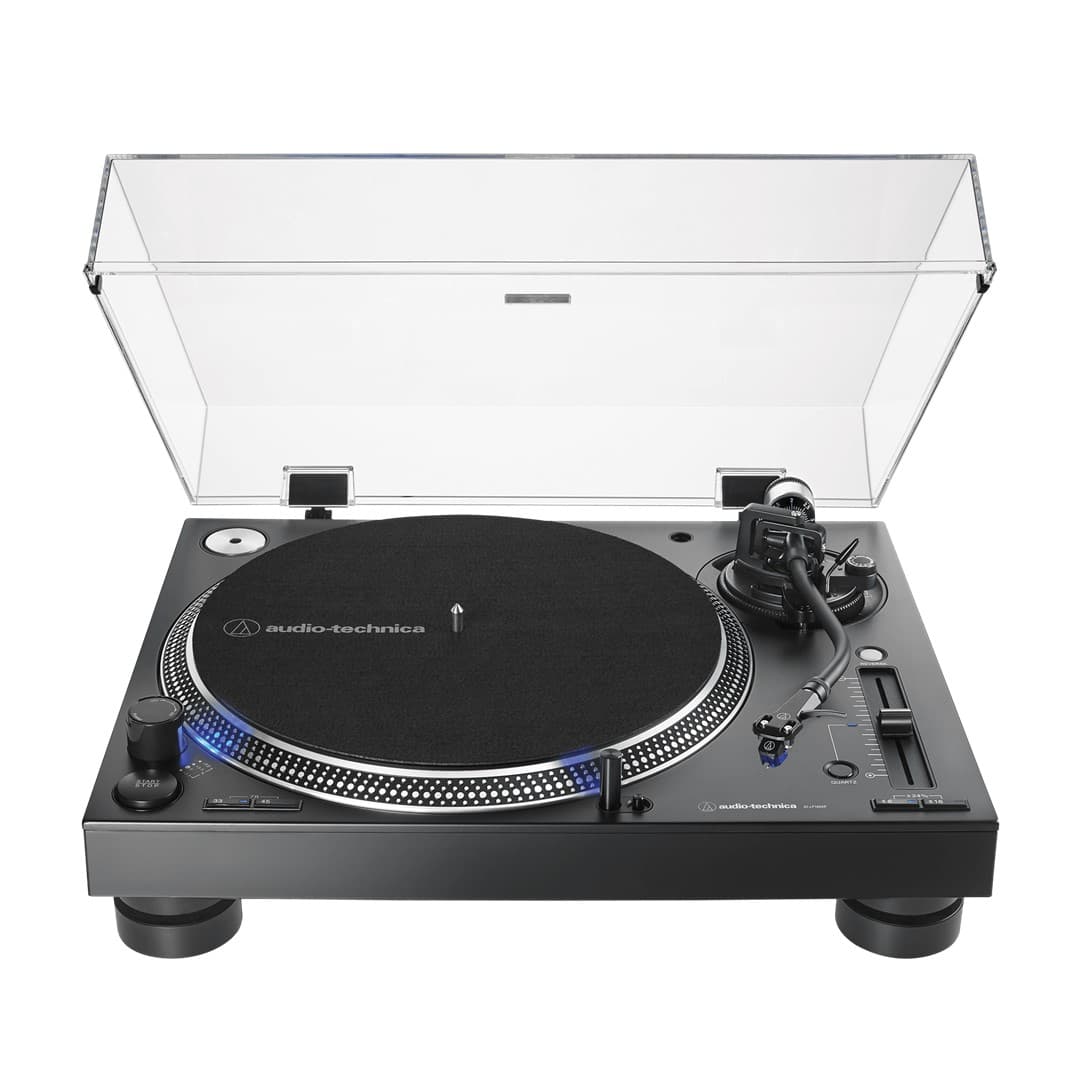
Turntables. Wear on a turntable is largely visible and audible. Check the platter spins true, check the tonearm moves freely and the bearing has no play, check the pitch fader works across its full range. Cartridges and styli are consumables you can replace.
Passive mixers, splitters, DI boxes and basic hardware. Simple circuits, few failure points, easy to test with a signal in and headphones out.
Multicores and snakes — but only if you test every single channel. A used multicore is a good buy and a big saving, because they are expensive new and there is nothing inside them to wear out electronically. The catch is that a broken wire inside the cable is completely invisible from the outside. A loom can look brand new and still have three dead channels.
So test it properly, or do not buy it. Go through every channel, one at a time, from one end to the other, with a cable tester or a signal and a pair of headphones. Wiggle the cable at both ends while you test, because breaks usually happen where the cable enters the connector. If the seller will not sit through that with you, that tells you something.
The Risky Buys
This is where first-time buyers lose money.
Amplifiers
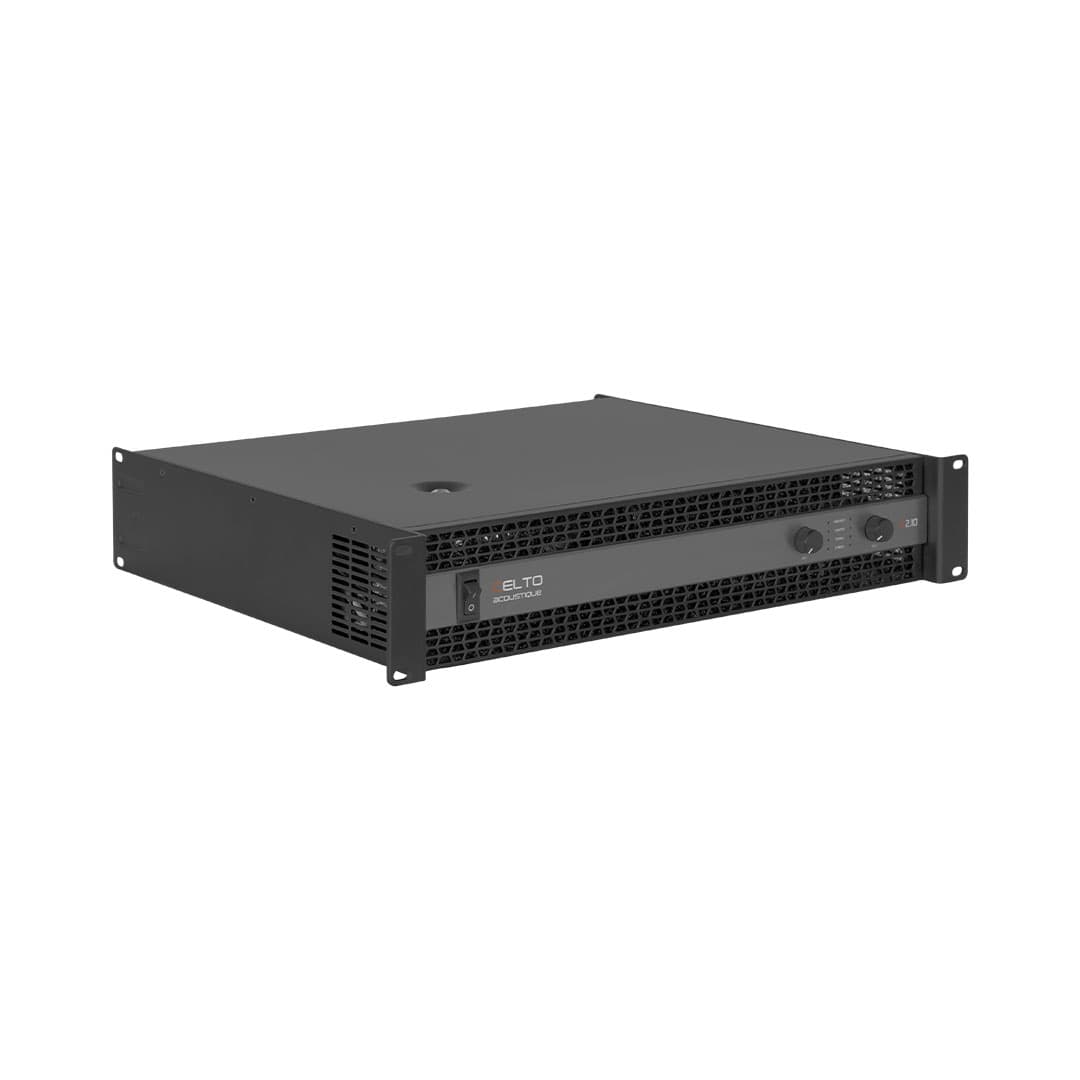
An amplifier can look perfect, power up, show its lights, and pass a quiet signal — and still be a dead unit. Amps fail under load. A dodgy repair, a lifted solder joint, a mismatched output device, a failing power supply capacitor: none of these show themselves until the amp is actually driving speakers hard.
We have seen plenty of "working" amps that clip, distort, run hot, shut down on protect, or take a channel out entirely the moment they are asked to do real work.
Never buy an amplifier without hearing it driven hard into a real speaker load, on both channels, for at least a few minutes. If the seller will not allow that, there is a reason.
Active (Powered) Speakers
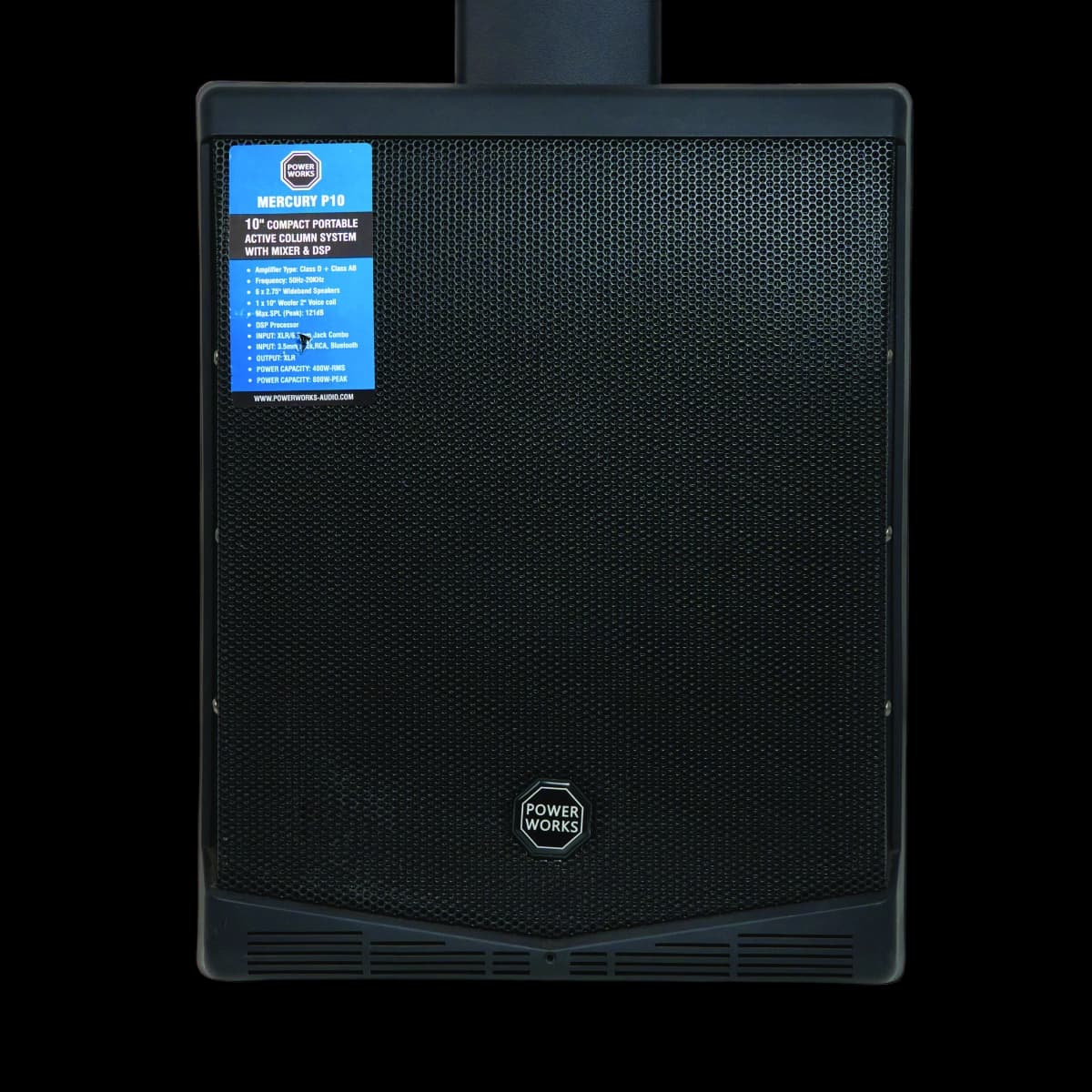
Same problem as amplifiers, with a built-in module you cannot see. A powered speaker has an amp, a power supply, a DSP board and a driver all in one box. Any one of those failing usually means a repair, and module availability for older or budget brands is often poor.
Test at volume. Listen for hiss, hum, crackle and cut-outs. Wiggle the input connector while it is running. Feel whether the module is getting excessively hot.
DJ Controllers and Mixers — the Liquid Problem
This is the one that catches the most people, and it is worth understanding properly.
Somebody spills a drink on a controller at a gig. They wipe the top down, it still works, and they say nothing. Meanwhile the liquid has gone through the fader slots and the button holes onto the circuit board underneath. Sugary drinks are the worst of the lot — the sugar stays behind and slowly corrodes tracks and contacts over months.
The unit keeps working. It gets sold. Then, weeks or months later, a channel dies, a jog wheel stops responding, or the whole board gives up. You take it in for repair and find the main board is unobtainable.
What to look for:
- Sticky, gritty or uneven fader travel — run every fader and crossfader through its full range several times
- Buttons that need a hard press, or that feel different from the ones next to them
- Discolouration or faint tide marks around the faders, buttons and knobs
- A sweet or sour smell around the unit
- Ask directly, and watch the answer: "Has anything ever been spilled on it?"
Also check:
- Jog wheels for wobble, dead spots or uneven touch response
- Every knob and encoder through its full range for crackle or jumps
- All inputs and outputs, including the ones you do not plan to use
- USB sockets for looseness — a worn socket is a common and annoying fault
- That any bundled software licence actually transfers to you, not just the disc in the box
Wireless Microphones
Wireless mics work by broadcasting on a radio frequency, and the rules about which frequencies you are allowed to use have changed in South Africa. When television moved over to digital, a chunk of the radio band that older wireless systems used got handed to the mobile networks.
That means a second-hand wireless set can be perfectly healthy and still be a bad buy. It may be illegal to use, and worse, it may simply not work properly, because you are now sharing space with cellphone towers and you will get dropouts and interference you cannot fix.
Before you buy, find the frequency range printed on the receiver or in the manual, and check it against what is currently allowed. If the seller cannot tell you the frequency range, do not guess. Also test every channel, and test it with the transmitter a good distance away and around a corner, not standing next to the receiver.
Moving Lights and Anything with Motors
Moving heads and scanners wear in ways you cannot see. The motors, gears and belts inside do the work, and a fixture that has done hundreds of gigs may pan and tilt roughly, overshoot its position, make grinding noises, or drift out of alignment partway through a show.
Power it up and run it through its full movement several times in both directions. Listen for grinding or knocking. Watch whether it returns to the same position each time. Check the fan is running and the lamp or LED engine is not noticeably dimmer or a different colour than a matching fixture next to it.
Anything with a Battery
This one catches a lot of people, because the battery is the one part of any second-hand unit that is guaranteed to be worn, and you cannot see any of that from the outside. A battery-powered speaker can look immaculate and still only run for twenty minutes.
It matters which kind of battery is inside:
Older lead-acid batteries, found in a lot of budget portable PA speakers, are the heavy sealed bricks. They lose capacity badly if they have been left flat for long periods, which is exactly what happens to gear sitting in a garage. The good news is they are cheap, generic, and easy to replace yourself.
Lithium batteries, found in most modern gear, are lighter and last longer — but they are often built into the unit, sometimes soldered onto the board, and frequently specific to that model. If that battery is finished and the manufacturer no longer sells a replacement, you have bought a speaker that only works plugged into the wall.
What to do:
- Ask how old the unit is and how the battery has been stored. A battery left flat for a year is a battery in trouble.
- Charge it fully and then actually run it at a realistic volume, with a clock going. Compare what you get to the runtime the manufacturer claims.
- Check whether a replacement battery is still available and what it costs, before you buy.
- Walk away from anything with a swollen or bulging battery, a case that has visibly deformed, or a unit that gets hot while charging. That is a fire risk, not a bargain.
End of Life: The Bargain That Cannot Be Fixed
This is the single most important thing to understand about buying used, and almost no first-time buyer thinks about it.
Every piece of gear eventually reaches end of life. The manufacturer stops making it, then stops supporting it, then stops stocking spares. In South Africa this happens faster than most people expect, because local distributors carry limited spares for current models and effectively none for discontinued ones.
So the question is not just "does it work today?" It is "if this breaks, can it be repaired?"
A ten-year-old controller in mint condition is still a ten-year-old controller. When a board fails, and boards do fail, you are looking at sourcing a used donor unit from overseas or writing the whole thing off. The bargain becomes a paperweight.
Before you buy, check:
- Is the model still in current production, or at least recently discontinued?
- Does a South African distributor still support the brand?
- Are spares — faders, jog wheels, knobs, drivers, diaphragms — still available?
- Does the manufacturer still release firmware and driver updates for it? Software support matters as much as hardware, especially for controllers that must talk to modern operating systems.
A slightly newer unit at a slightly higher price is almost always the better buy. Serviceability is worth more than the discount.
How to Test a Passive Speaker
Passive speakers are one of the safest used buys, but only if you check them properly. Here is a walkthrough anyone can follow.
1. Look at the cone and surround.
Shine a light in. Check for tears, splits, dents or a surround that has gone brittle or is lifting away from the cone. Check the dust cap is intact and not pushed in.
2. Press the cone gently.
With clean, flat hands, press evenly on both sides of the cone at once and push it in slowly, then let it come back. It should move smoothly and silently. If you hear or feel a scraping or gritty sound, the voice coil is rubbing — that driver is on its way out and will need a recone.
3. Check it with a multimeter.
Set the meter to resistance (ohms) and measure across the speaker input. On a nominal 8-ohm cabinet expect somewhere around 6 to 7 ohms; on a 4-ohm cabinet expect roughly 3 to 4. An open circuit — no reading at all — means a blown voice coil or a broken connection. A reading far below expected can indicate a shorted coil. Note that a passive crossover will affect the reading, so treat it as a sanity check rather than a precise measurement.
4. Run a sine sweep through it.
This is the trick that finds faults music will hide. Download any free tone or frequency generator app — most will sweep from 20 hertz up to 20 kilohertz — and run a slow sweep through the cabinet at moderate volume. A rubbing coil, a loose screw, a cracked joint or a torn surround will announce itself as a buzz or rattle that tracks the tone as it moves.
Two cautions. Do not sit at high level on very low frequencies through a top box, or you will bottom the driver out yourself and cause the damage you came to look for. Sweep at a sensible volume, not flat out. And expect some port noise at the very bottom end on a ported cabinet — that is normal air movement. What you are listening for is the harsh, mechanical buzz that follows the tone up and down the sweep.
5. Listen to it properly.
Start quiet with familiar music, then bring the level up gradually. Listen for buzzing, rattling, a farting sound on bass notes, or anything that changes character as the level rises. Play something with clear hi-hats and cymbals to confirm the horn or compression driver is alive — a dead high end is easy to miss if you only test with bass-heavy tracks.
6. Check the cabinet itself.
Corners, handles, grille, and the input plate. Push on the panels — soft, swollen or delaminating board means damp damage. Check the screws around the driver and jack plate are all present and tight. Rattles at volume often come from loose hardware rather than the driver.
7. Test both cabinets, and swap the cable.
If one sounds different, swap the cable and amp channel to confirm whether the fault is in the speaker or the signal chain.
Staying Safe on the Sale Itself
There is a risk in buying privately that has nothing to do with electronics.
Meeting a stranger you found online, at an address you do not know, carrying cash — or arriving with valuable gear in your boot — is a well-known setup for robbery. Equipment sales have been used to lure people to fake meetings in this country more than once. Gear is easy to sell on and hard to trace.
If you do buy privately
- Meet in a busy public place in daylight, never a private residence or quiet parking area
- Take someone with you and tell somebody else where you are going
- Pay by instant EFT rather than carrying cash
- Be wary of anyone pushing you to come alone, come after dark, or come immediately
- Ask for the original invoice or proof of purchase — stolen gear is common in this industry, and if you buy it, you lose it
Judge the seller by how they behave, not by where they are. You do not need a list of areas to avoid. What matters is whether the person is willing to do this the safe way. A genuine seller has no problem meeting somewhere public and busy, in daylight, with someone else present. If they insist you come to them, if they will only do it after dark, if they push you to come alone, or if they get impatient when you ask for a normal, sensible meeting place — that is your answer, whatever the address is.
And if the price is too good to be true, it is too good to be true. This is the oldest warning there is and it still works. Gear sells for roughly what it is worth. When something is priced far below everything else like it, there is a reason: it is faulty, it is stolen, it is not what it is described as, or there is no item at all and you are the mark. A bargain that makes no sense is not luck.
A deal that saves you a few hundred rand is not worth putting yourself in that position.
The Case for Buying Used from a Shop
There is a middle road between paying full price for new and gambling on a stranger's kit.
Second-hand gear that comes through NXT Level Tech goes across a technician's bench before it goes onto the floor. It is tested properly — under load, at volume, through every input and output — and any faults are found and dealt with before it is listed. A lot of what we sell used was never faulty to begin with. Where a unit has been repaired, it was repaired correctly by our own workshop and tested afterwards.
You also get honest advice on what you are actually buying. If a unit is end of life, or spares are getting hard to find, or it is not the right tool for what you are trying to do, we will tell you. We would rather sell you the right thing once.
Every second-hand unit we sell carries a 30-day exchange or repair against faults. Two sensible exclusions apply: speaker drivers damaged by overdriving or abuse are not covered, and neither is damage caused by bad power — dirty mains, generators, or incorrect voltage. Beyond that period, our workshop is still here, and we will support you in keeping the gear running.
And you buy it in a shop, with a door, a counter, a phone number and an invoice.
Browse the Marketplace
Our current second-hand stock lives under the Marketplace tab on the NXT Level Tech website. Everything listed there has already been through the workshop bench, so you are not sifting through unknowns — you are looking at gear that has been tested and signed off.
You can also come and see it in person at the Blackheath showroom before you commit to anything. Plug it in, listen to it, ask questions, take your time. That is the part no online listing can give you.
Selling or Upgrading Your Own Gear
It works the other way round too.
Trade-ins. If you are upgrading, bring your current gear in and we will look at taking it against the new unit. It saves you the hassle of selling it yourself.
Consignment. If you would rather get a better price than a straight trade-in, we can sell your gear for you on consignment. It goes onto the Marketplace and onto the showroom floor, and we handle the enquiries, the time-wasters and the sale itself.
Worth noting: this also means you are not the one meeting strangers in car parks with expensive equipment in your boot. The same safety problem applies whether you are buying or selling — and consignment takes you out of that situation entirely.
One Last Tip
Whatever you buy and wherever you buy it, run it on a decent surge-protected supply from day one. Bad power kills more amplifiers and powered speakers in this country than bad DJs do, and it is the cheapest insurance you will ever buy.
Ready to buy, sell, or trade in?
Every unit on our Marketplace has already been through the workshop bench. Come see it in person at the Blackheath showroom, or talk to us about trading in or consigning what you've got.
Browse the Marketplace Trade in or consign Talk to a specialist